
Good food takes more than good intentions.
For Those Craving Food They Can Trust.
We created this page with you in mind – the curious foodies hungry for transparency. We believe you deserve to know where your food comes from, the practices that help bring it to shelves, and everything in between.
Want to know every detail about your food? We’re here for it. Scroll to learn more. Didn’t find what you’re looking for? Reach out and ask. We love to answer your questions. Seriously.

Transparency isn’t just a buzzword; it’s a muscle.
We make decisions by weighing the benefits and trade-offs to each of our stakeholders over the long run, and believe in our approach. We want you to understand the nitty-gritty of how we arrived there.

what’s in our feed
Ensuring hens have the nourishment they need to do their thing.

why the yolks are so golden

our approach to food safety

proud to be publicly traded
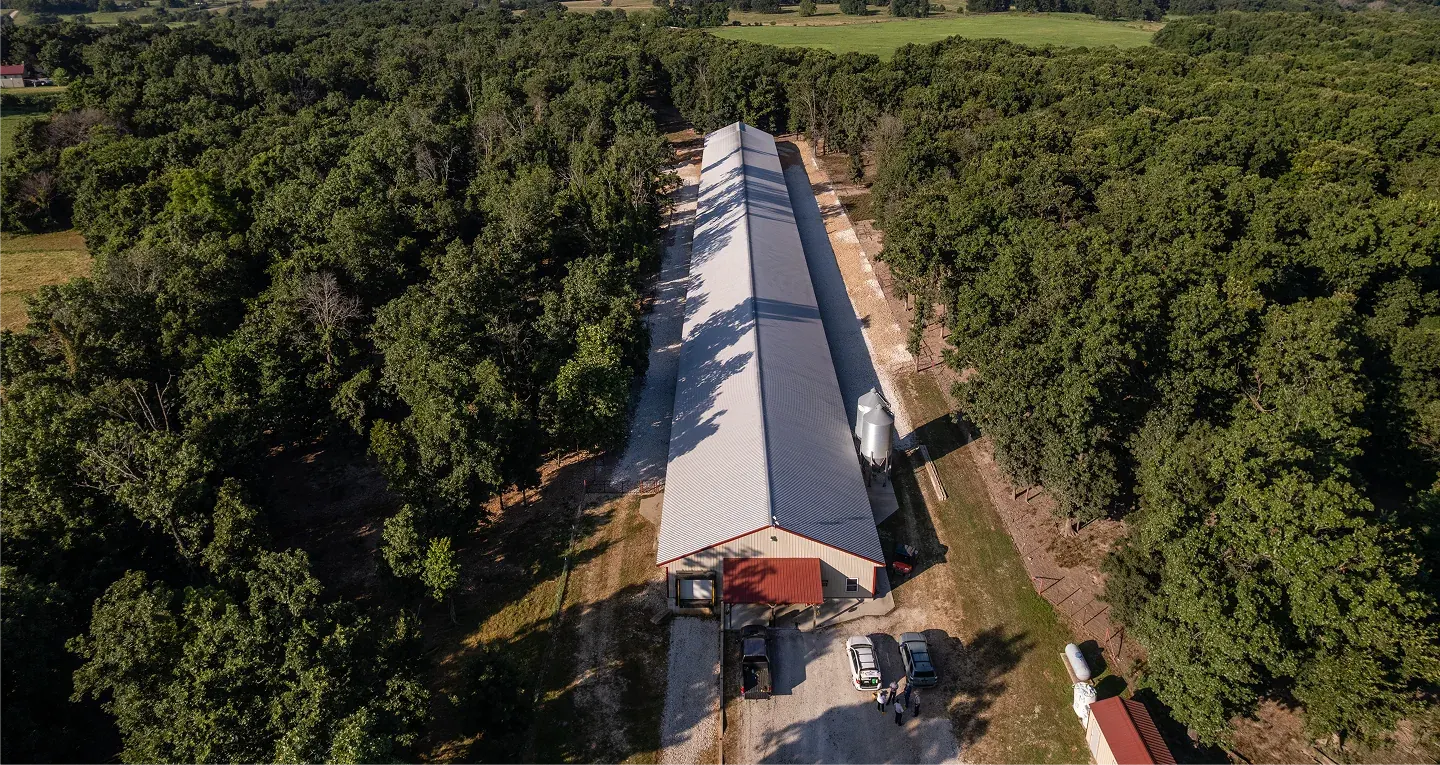
See inside a Vital Farms barn
A digital tour that gives you an immersive look inside where the girls roost and where our farmers collect and pack eggs for you.
A Text Guide to the Tour
Entrance
The outdoor approach to the farm.
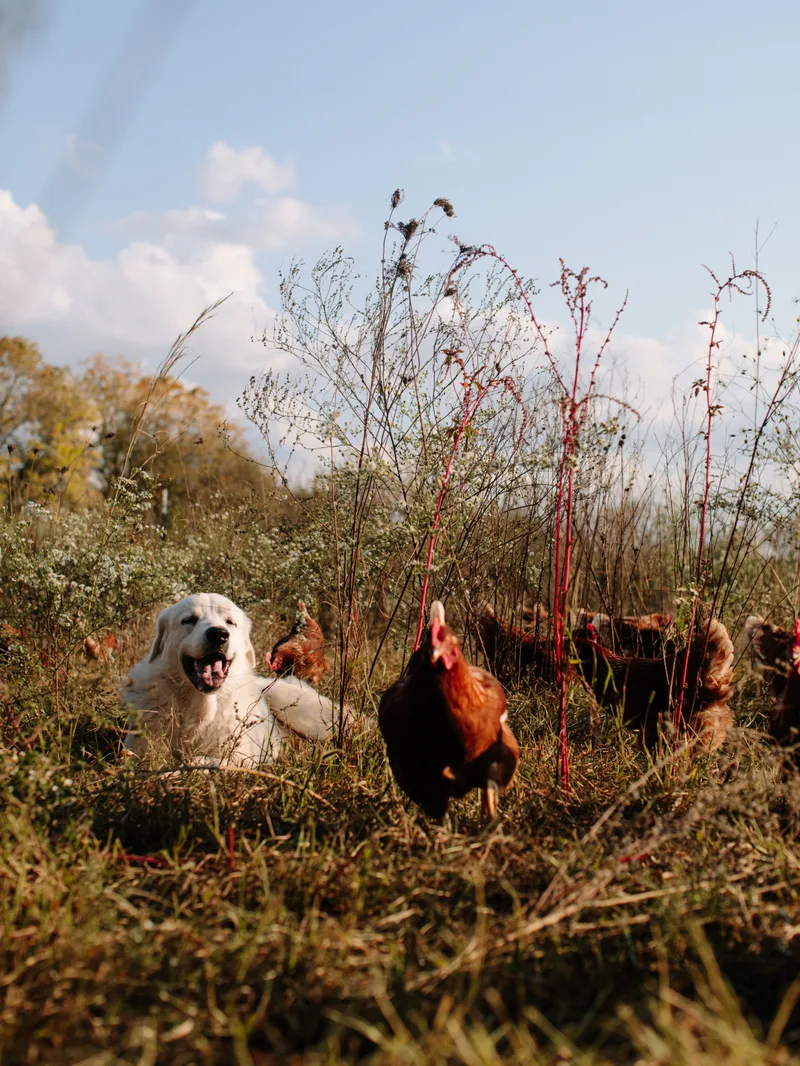
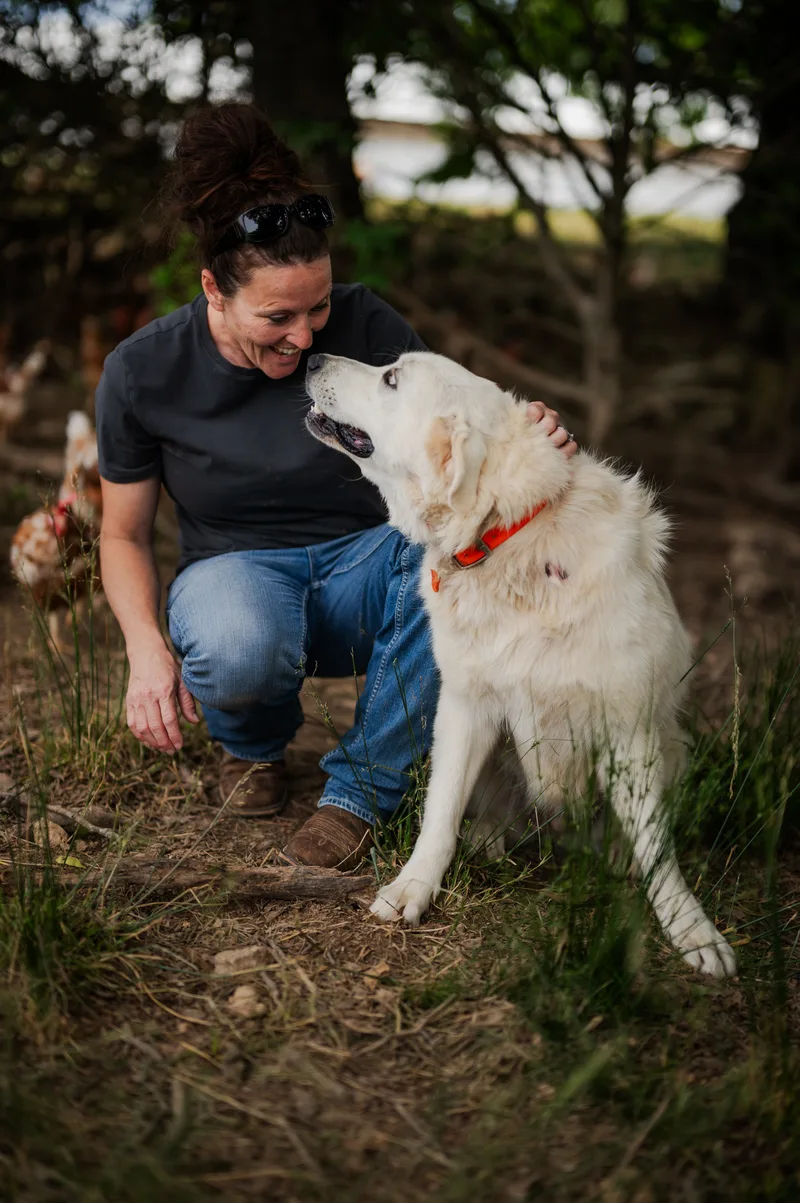
Pups with Purpose
Some of our farmers are proud owners of working dogs who excel at keeping the flock safe and sound. These loyal guardians happily patrol property lines, guard the hens against predators, and provide love and companionship, of course!
Also visible here:
- LOADING DOCK
- EGG ROOM ENTRY
Egg Room
The indoor clean area, where visitors sign in and boot up.
Safety First!
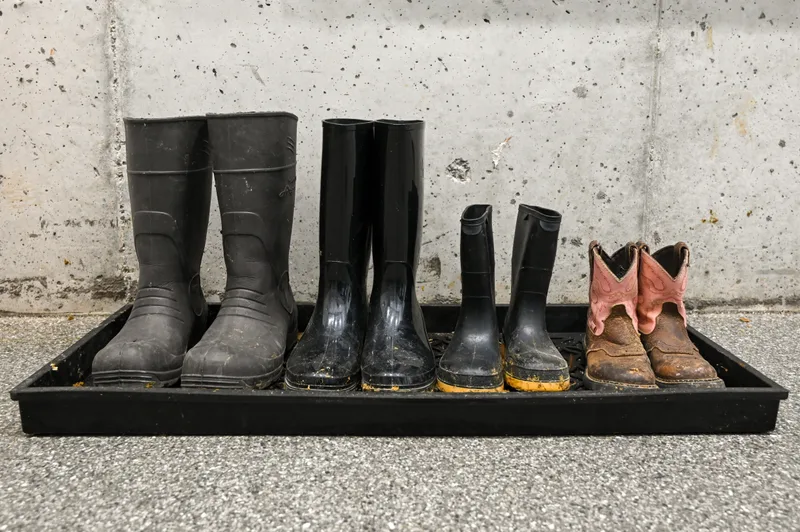
We take biosecurity quite seriously on our farms. All visitors give their shoes a bath before entering the egg room and barn in service of keeping the girls safe and healthy.
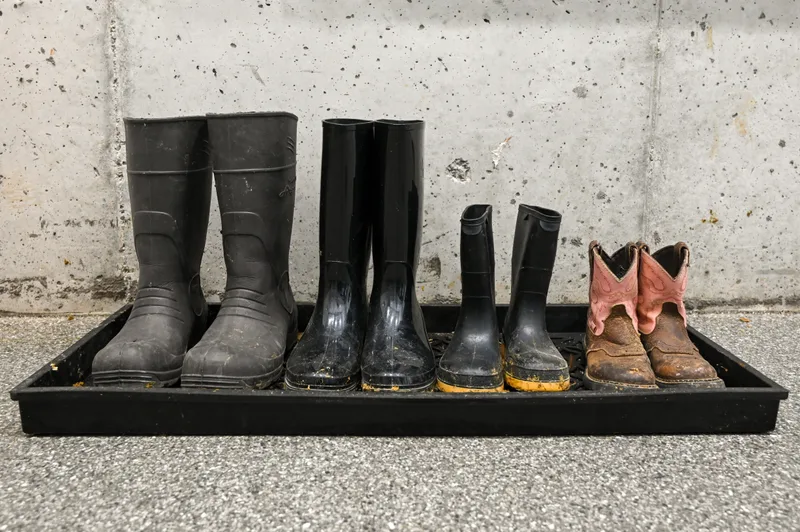
The Chill Zone
Once eggs are packed on trays, they head to the egg cooler to hang out before being picked up and transported to Egg Central Station where they'll be washed and packed into cartons.
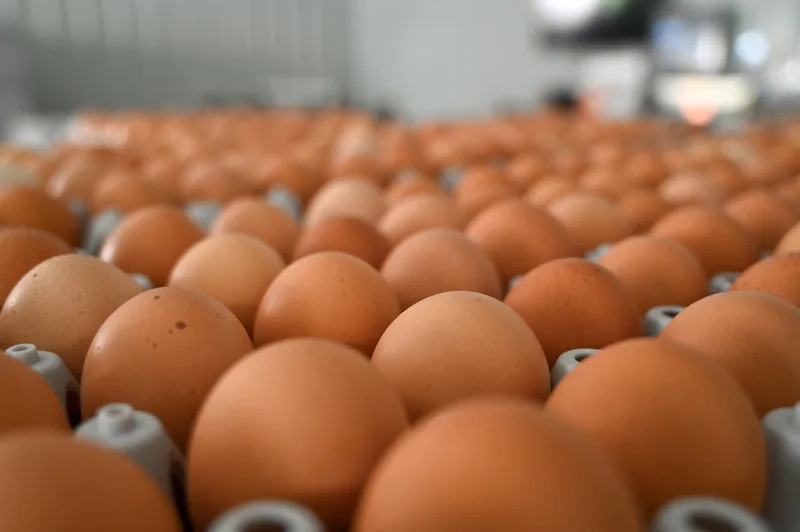
Also visible here:
- VISITOR LOG
- RODENT CONTROL
- BATHROOM
- CONTROL ROOM
Egg Collection
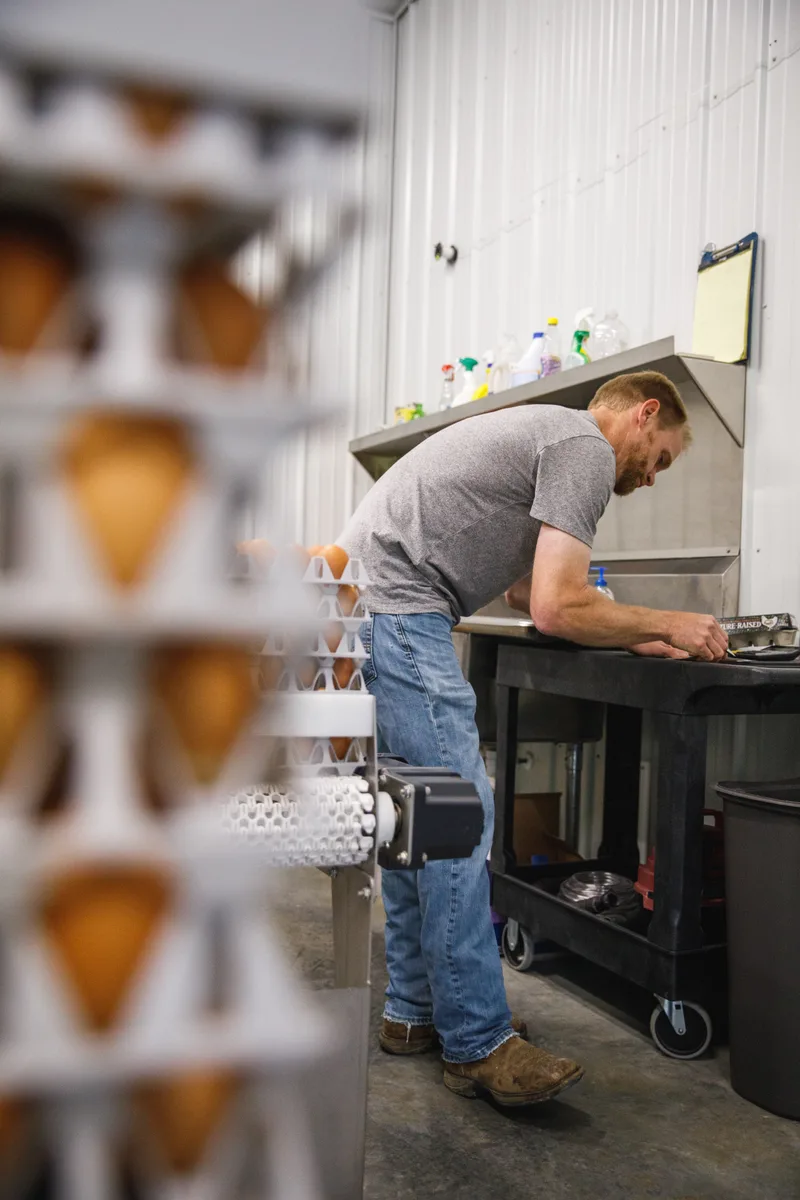
Where the eggs are gathered and packed onto trays.
Pack and Stack
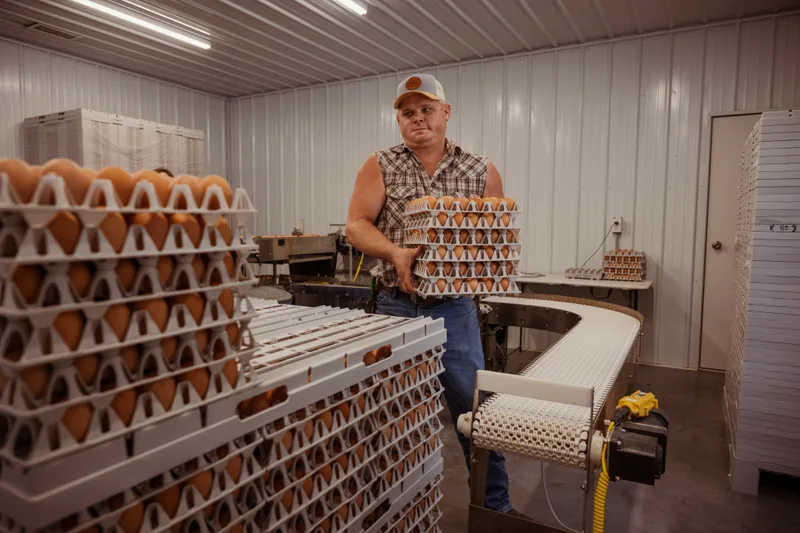
On most of our farms, the egg room is fitted with machines that delicately pack eggs onto trays. The blue ergonomic floor plate moves the stack up and down to prioritize farmer safety when lifting heavy trays.
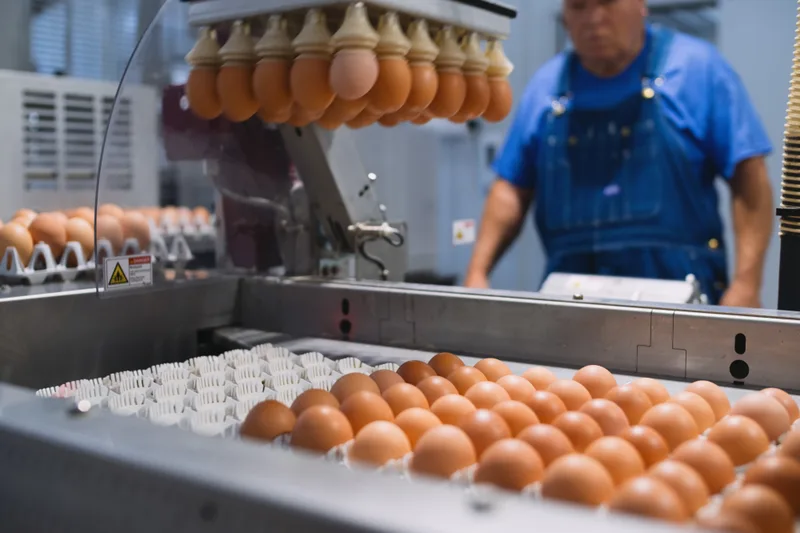
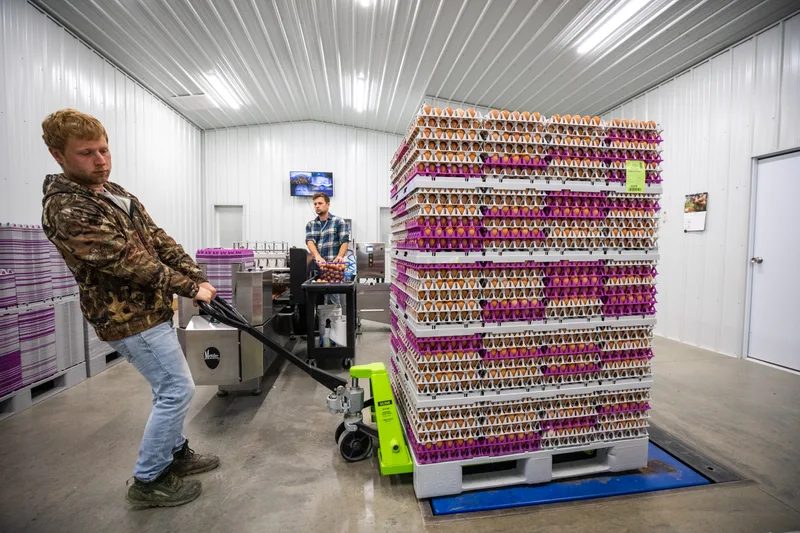
Safety First!
We take biosecurity quite seriously on our farms. All visitors give their shoes a bath before entering the egg room and barn in service of keeping the girls safe and healthy.
Also visible here:
- VISITOR LOG
- EXIT
- CONTROL ROOM
- BATHROOM
- EGG COOLER
Egg Cooler
The chilled room where packed trays wait for pickup.
From Farm to Carton
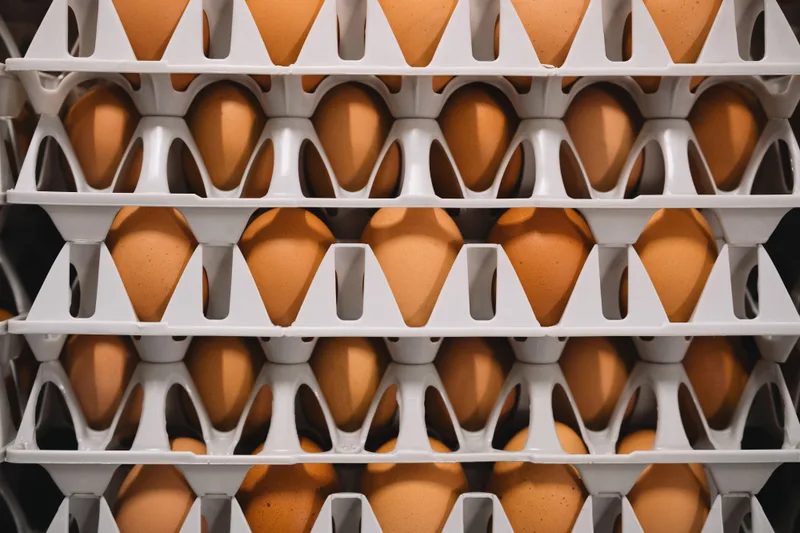
Each pallet is labeled with the farm's name. When the eggs arrive to Egg Central Station to be washed and packed, that same farm name is printed on the end of those cartons, ensuring you can trace your eggs back to the farm!
Also visible here:
- LOADING DOCK
- EGG ROOM
Side Barn
The hen house floor from the side, flock present.
360° video available at this stop: A long view down a barn aisle: hens crowded along the feeder line on either side, stretching into the distance beneath rows of overhead lighting.
A Girl's Gotta Eat
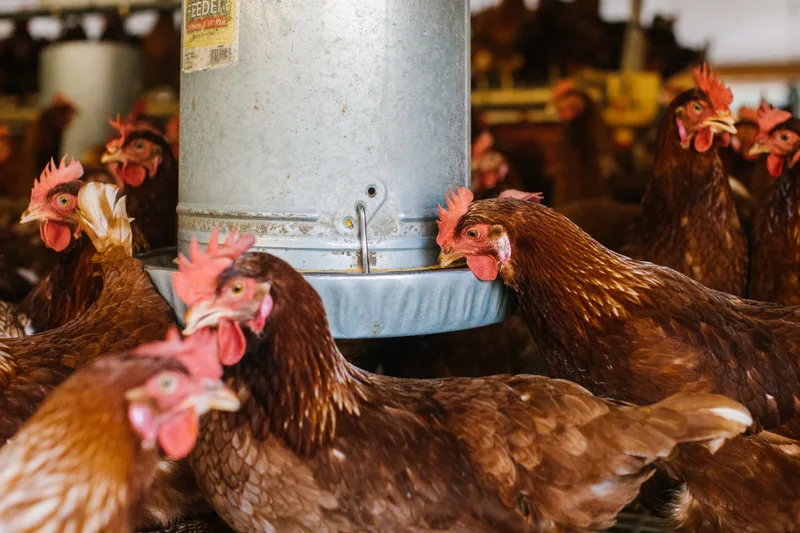
Alongside their pasture snacks, the hens receive an essential feed that consists primarily of corn and soybean meal. The nutritional density and composition of the feed provide the protein and energy needed to lay regularly and roam the pasture.
Plenty of Perches
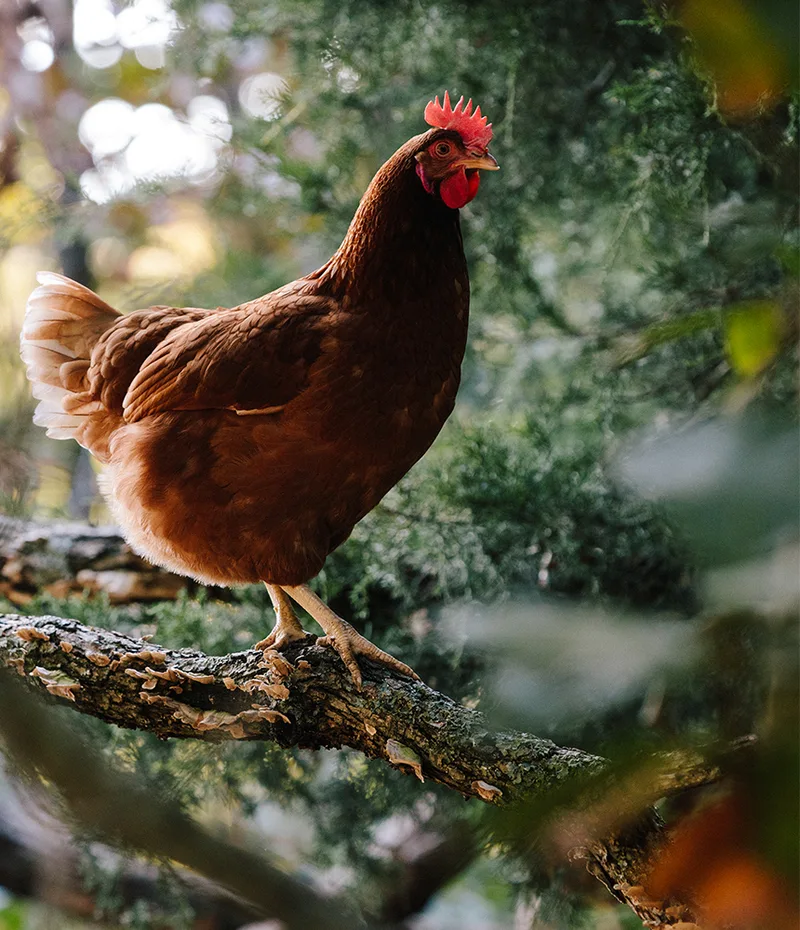
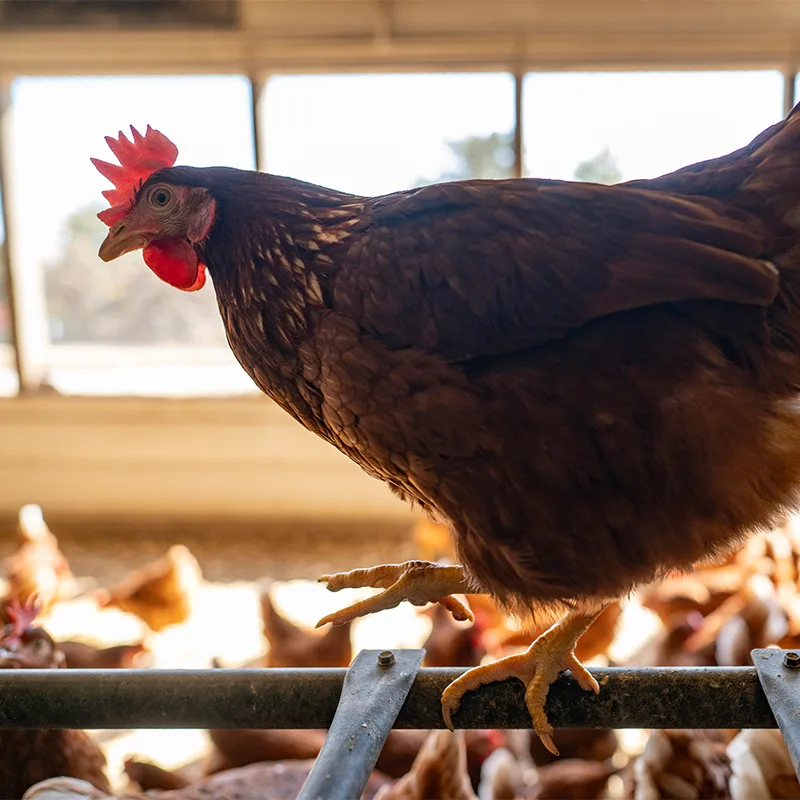
Perches are important to hen well being. Roosting up high is an instinctual safety mechanism! Hens are descendents of wild jungle fowl who slept high in trees to avoid predators on ground.
Back Barn
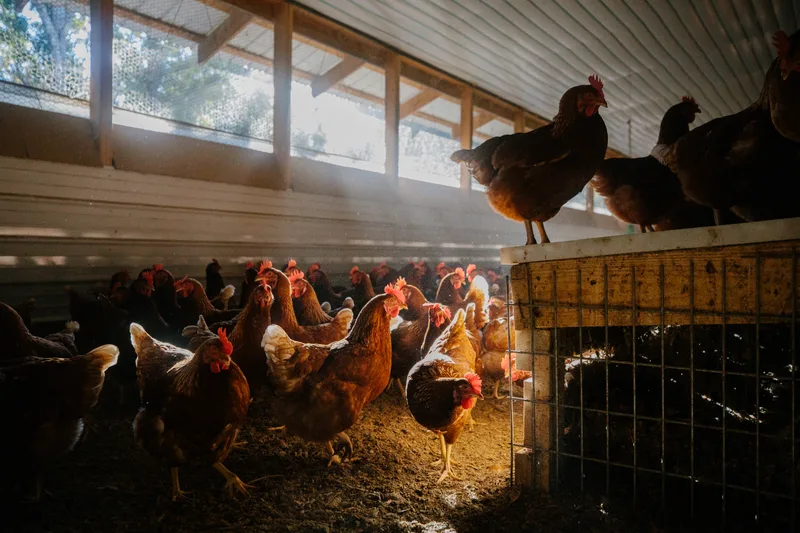
The back of the hen house, nesting boxes in view.
360° video available at this stop: A straight view down the center barn aisle: hens on the floor and perches on either side, several walking toward the camera.
Hydration is Key
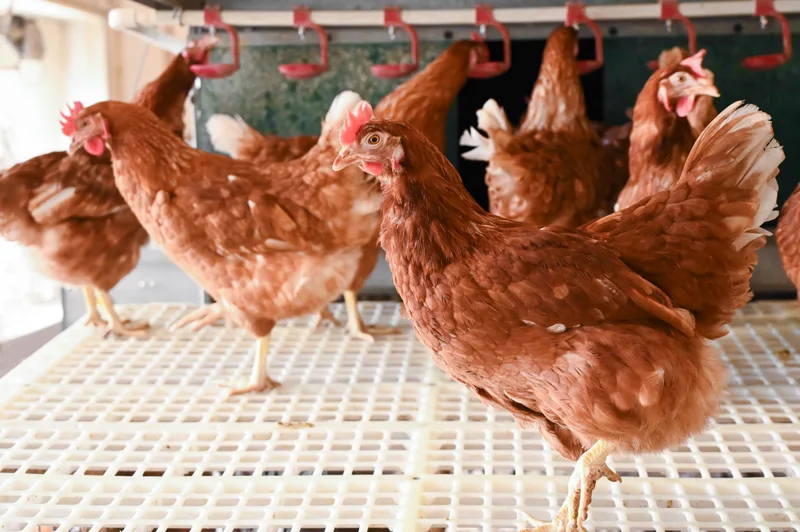
Our barns maximize hen comfort! Waterers are thoughtfully placed next to the private nesting boxes to encourage the girls to stay hydrated when laying.
Privacy, Please!
Our hens typically lay eggs in the mornings in these protected and private nesting boxes in the barn. By 9:30am, the barn doors open, and the girls are free to roam and forage in the pastures!
East Apron
The covered apron, east end.
360° video available at this stop: A view along the barn's east apron: hens spread across the gravel path toward the tree line, with more of the flock visible through the fence beyond.
West Apron
The covered apron, west end.
360° video available at this stop: A steady view along the barn's west apron: hens filing out through an open pop-door onto the gravel and gathering near the wall in dappled shade.
Sweet Freedom
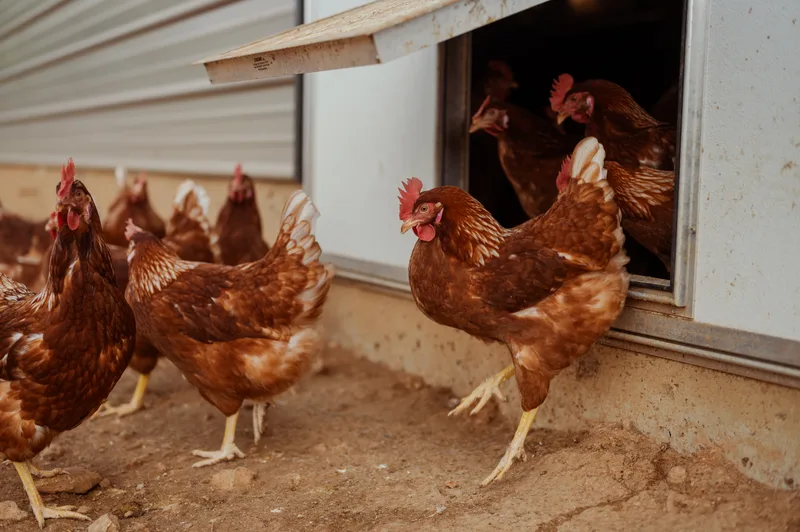
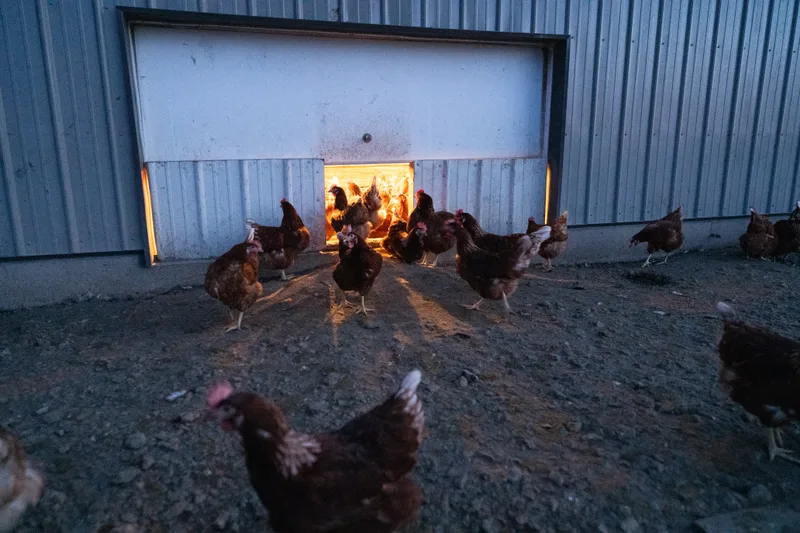
By 9:30 each morning year-round, our farmers open all barn doors, giving the flock ample access to their pasture paradise. By sundown, the girls return to the barn to roost and stay safe from predators.
Room to Roam
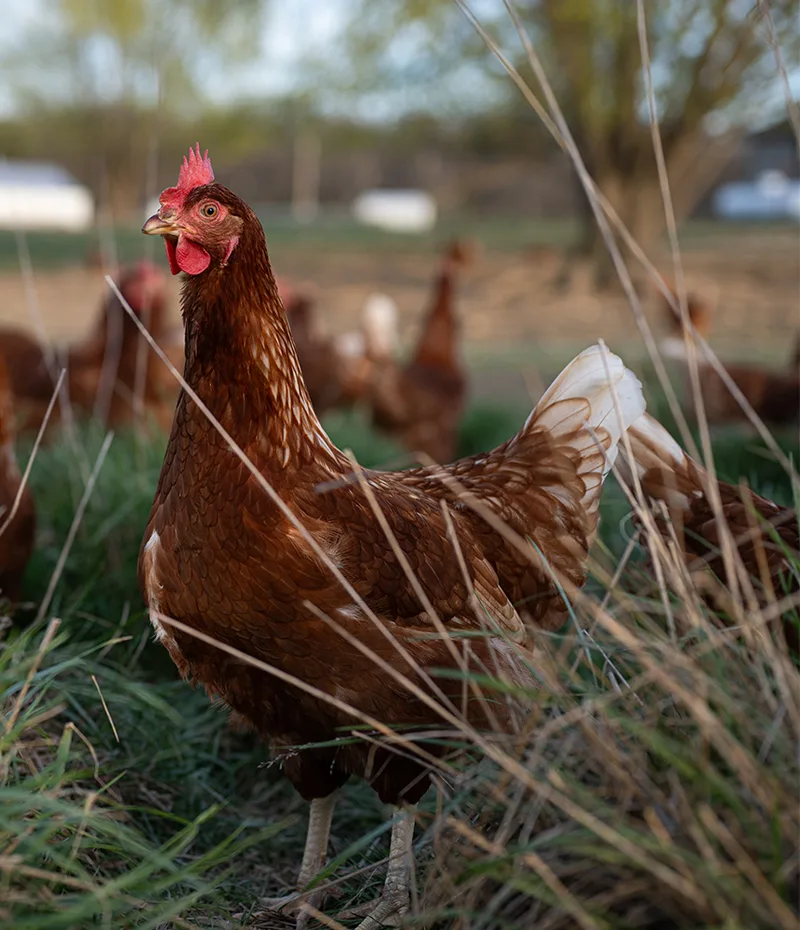
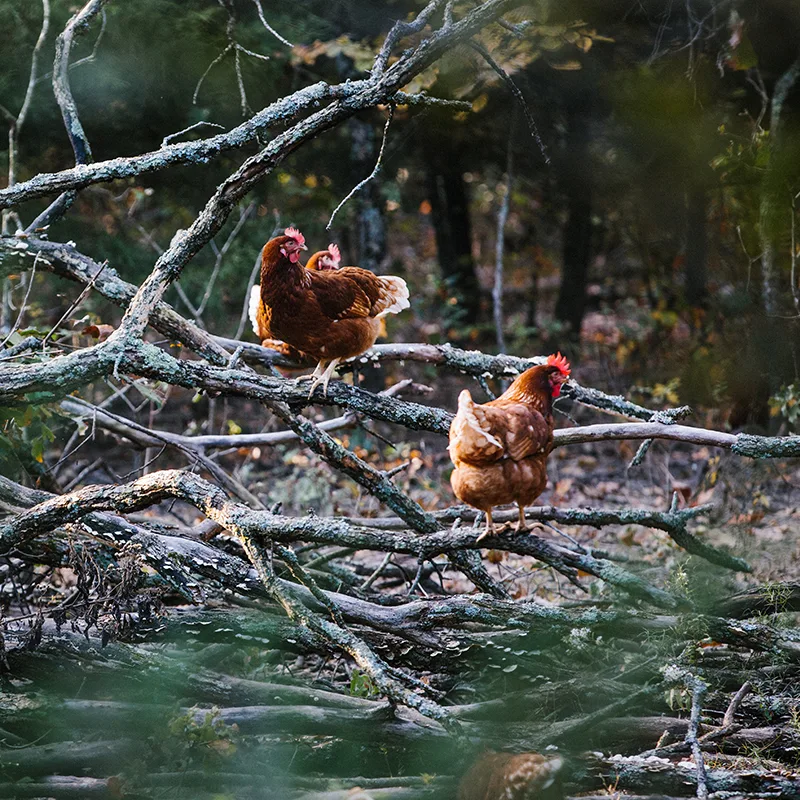
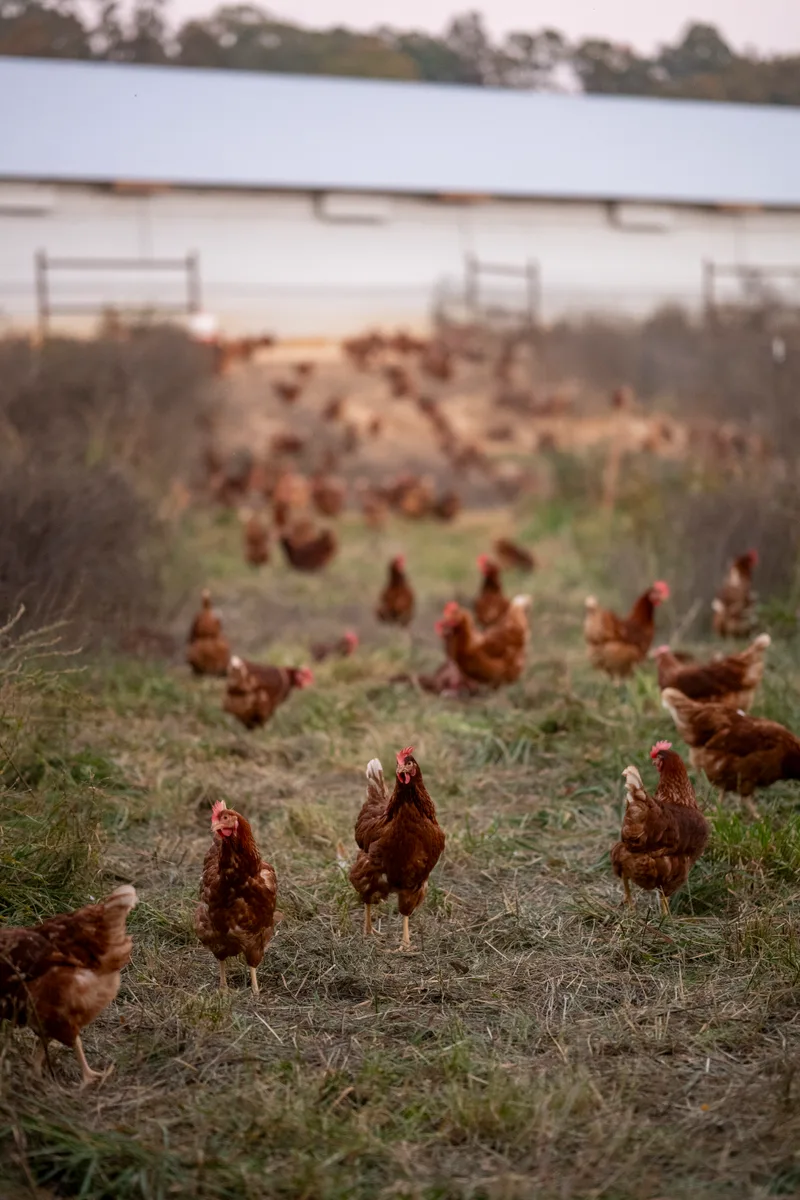
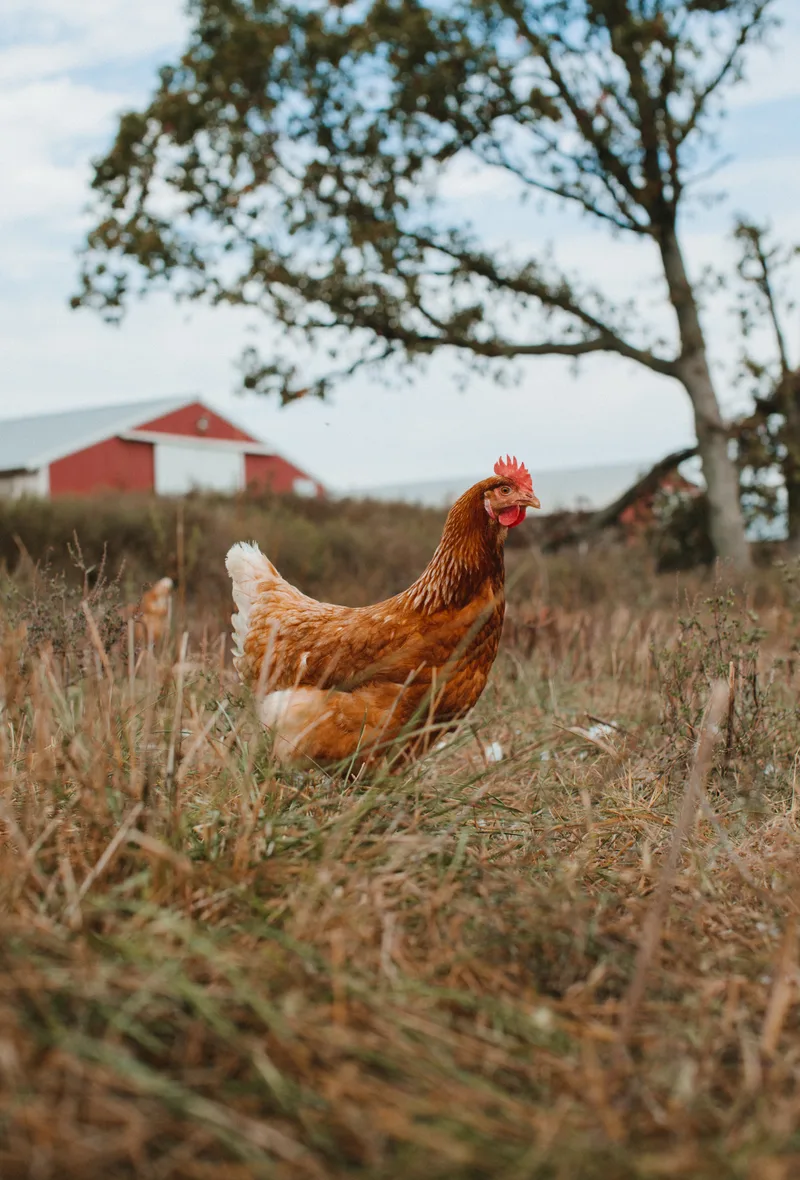
Whether a grassy meadow, a wooded oasis, or a bath-worthy dirt patch, the girls enjoy their 108 square feet of pasture where they forage for bugs, munch on grasses, or delight in a dust bath with their flockmates.
Also visible here:
- PASTURE ENTRY
Pasture
Open pasture.
360° video available at this stop: A wide, slow pan across the open pasture: hens spread out across the grass, foraging and dust-bathing in small groups under open sky.
The Barn Apron
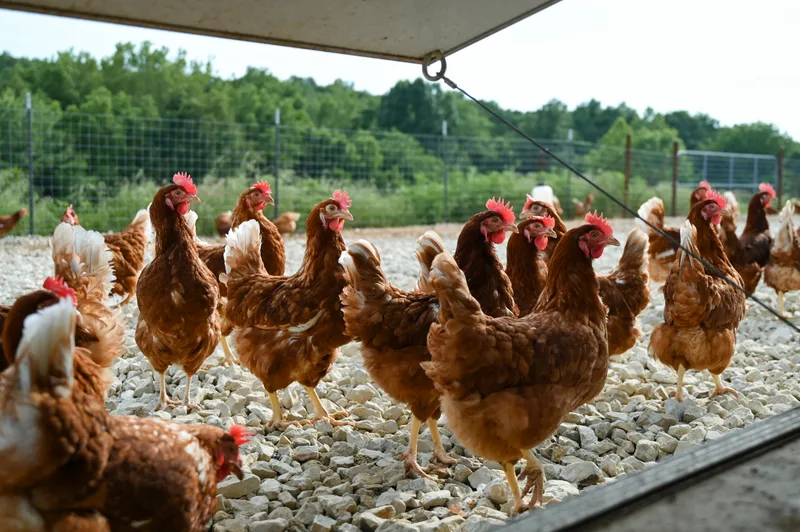
The barn apron is a buffer zone between barn and pasture that helps prevents erosion, keeps unwanted critters out of the barns, and encourages the girls to meander out further to grassy or wooded pastures where bugs await them!
Pasture Rotation
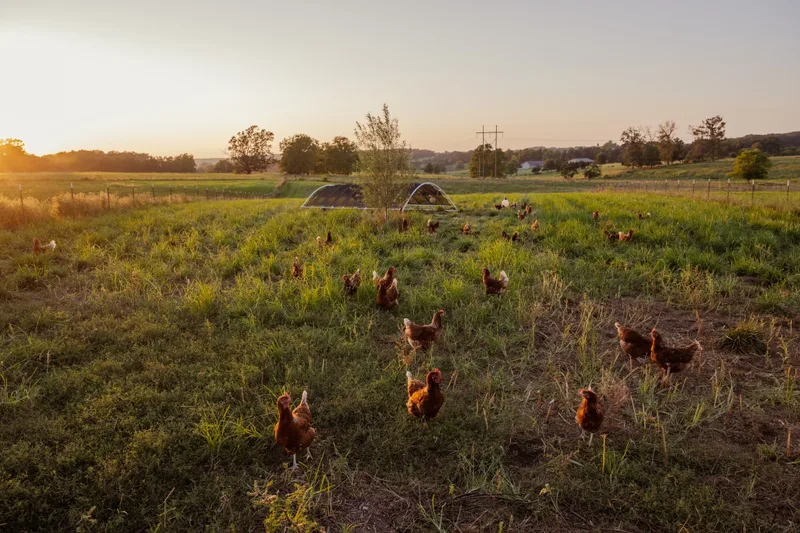
Our farms practice pasture rotation, meaning the girls are rotated to two new portions of the pasture about every 21 days. This gives each portion of land time to rejuvenate after the girls have had their fun foraging in those pastures.
Feed Bins
The feed bins, with the apron and flock beyond.
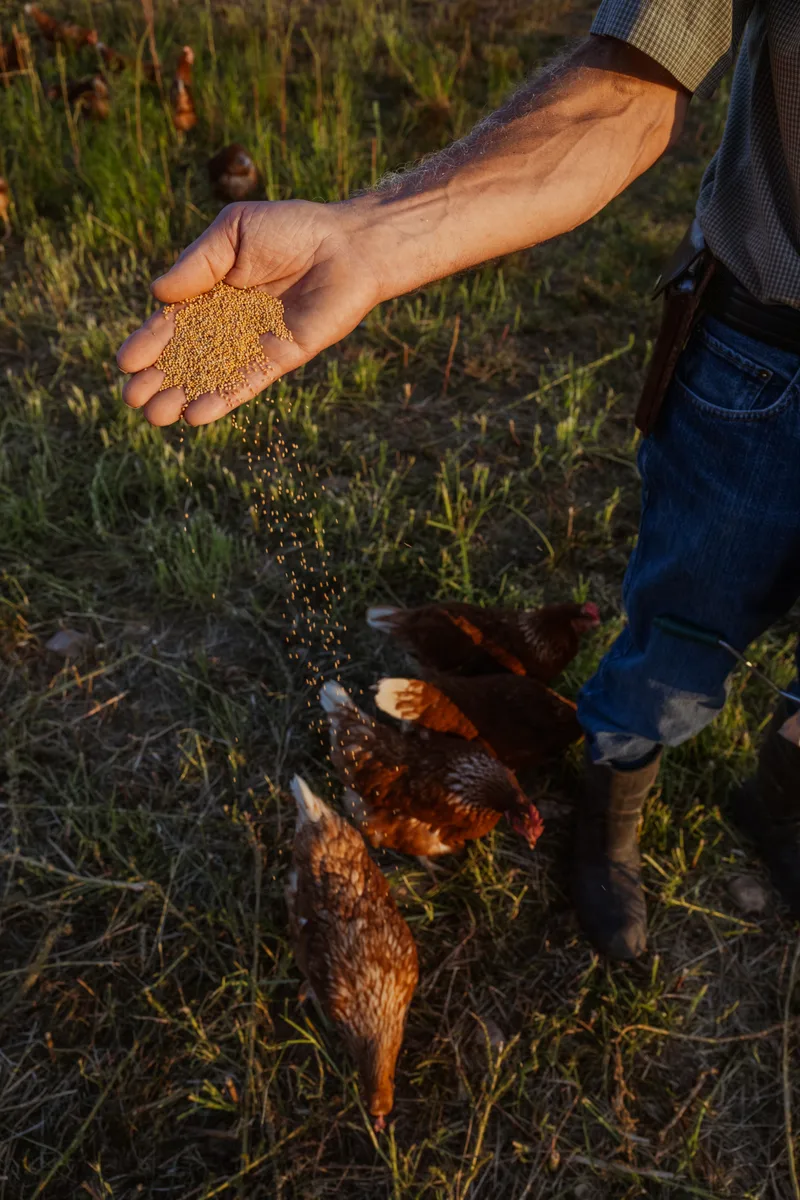
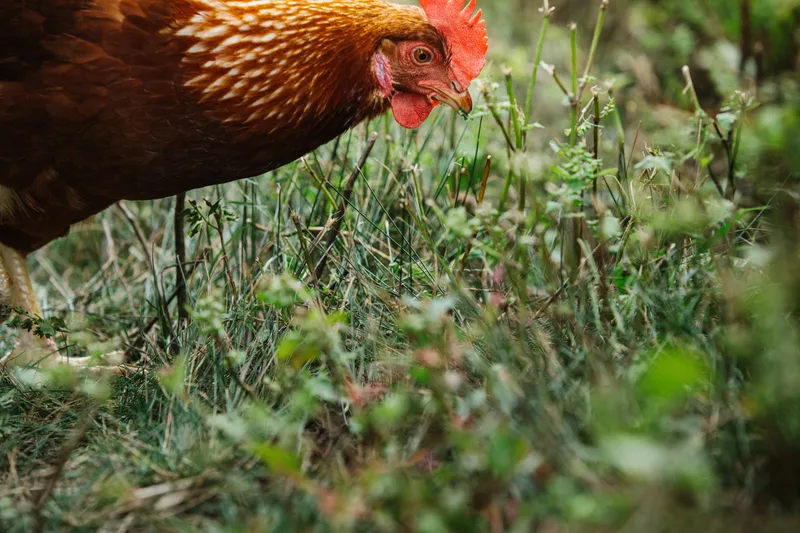
A Girl's Gotta Eat
Alongside their pasture snacks, the hens receive an essential feed that consists primarily of corn and soybean meal. The nutritional density and composition of the feed provide the protein and energy needed to lay regularly and roam the pasture.
Also visible here:
- BARN ENTRY 2
- BARN APRON
- CONTROL ROOM
- ESSENTIAL FEED STORAGE
Control Room
The control room.
Keeping the girls safe
We take biosecurity quite seriously on our farms. All visitors give their shoes a bath before entering the egg room and barn in service of keeping the girls safe and healthy.
Also visible here:
- BARN ENTRY
- EGG ROOM
Office
The farm office, looking at the desk.
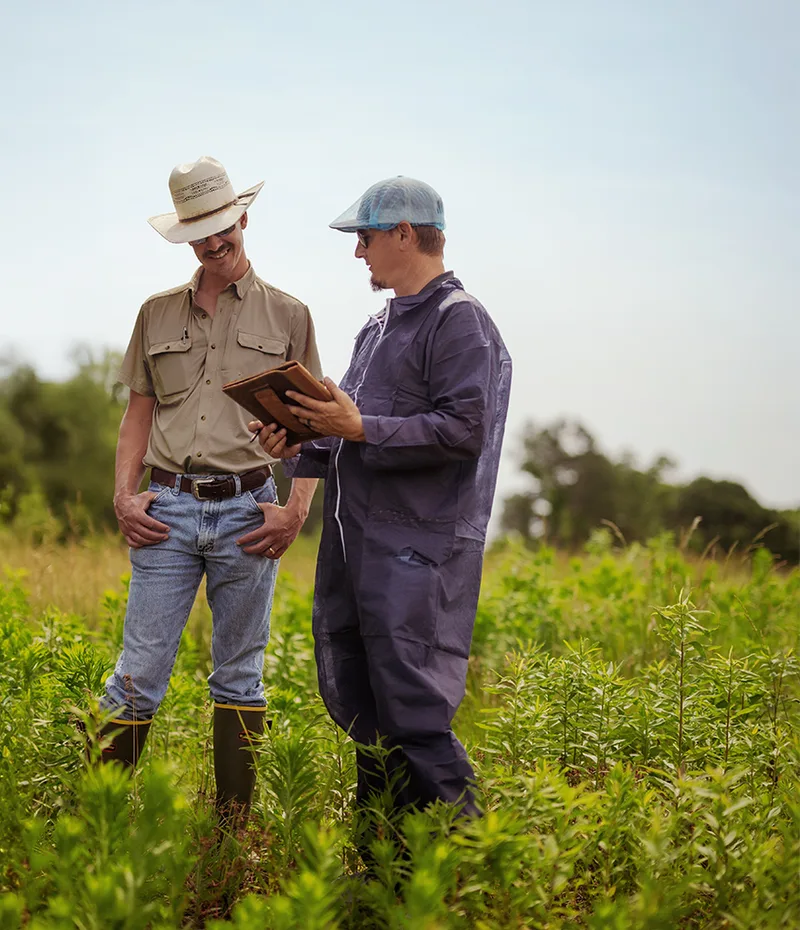
Our Farmers Mean Business
Our farmers own their farms and flocks, and like any business, paperwork is a part of the process! Administrative time is essential for our farmers to complete trainings and document their adherence to our strict standards.
Also visible here:
- EGG ROOM

Farming ain’t always pretty, but it’s beautiful.
There’s a lot of farm practices out there that aren’t always clear. We’re aiming to change that. We believe you deserve to know the details about the food you buy.
Transparency
See the Actual Farm
Every carton can be traced back to the farm it was laid on. Because you deserve transparency!
Accountabiilty
Stakeholder Model
We prioritize the long-term benefits of everyone we work with. Farmers, suppliers, customers and communities, to name a few.
Standards
Farm Practices
Each of our farms follows a strict set of standards with regards to animal welfare, farming practices, and tending to the land.
A menu Mother Nature would approve of.
Our girls spend their days foraging in the pasture, snacking on local grasses, bugs, and worms. But even the most dedicated forager can't get everything she needs from the land alone. That's why, alongside their pasture snacks, they get a nutritious, essential feed made mostly with corn and soybean meal – giving them the energy they need to roam, lay, and live their busy hen lives. Their feed also includes paprika and marigold to help support those deep orange yolks we know you love.

Ground Corn

Soy Meal

Native Grasses

Marigold

Paprika

Wild Seeds

Dandelions

Wild Sprouts

Critters on Pasture
Farm Practices
We believe in showing you exactly how we operate. Let's crack it wide open.
To protect the girls from pecking each other, we follow an industry-standard practice of dulling the tips of their beaks with an infrared treatment. This process helps ensure they don’t hurt themselves or one another. You can read more about beak trimming from Certified Humane®, one of our auditors, here.
We went public in 2020, which means anyone can buy VITL shares. BlackRock and other investment groups own shares. So do our crew members, who receive annual grants regardless of title or seniority, from our most junior team members to our CEO. If you want to better understand some of our core financials, check out our investor page. It’s all open to the public.
Because male chicks will not grow to become egg-laying hens, it’s the industry norm for hatcheries to identify male chicks upon hatch and euthanize them using methods approved by the American Veterinary Medical Association (AVMA) guidelines.
At Vital Farms, we’re committed to improving the lives of animals through food. In late 2026, we plan to adopt in-ovo sexing technology in collaboration with our primary hatchery supplier, Hy-Line North America.
Hy-Line North America has installed Cheggy technology developed by the German company, AAT, which uses a safe, non-invasive scan to determine whether the developing chick is male or female. This determination occurs before the embryo can feel pain, and the male eggs are prevented from developing further — allowing hatcheries to significantly reduce the number of male chicks that hatch.
The birds hatched after in-ovo sexing will begin arriving on farms in early 2027, and by 2028, we anticipate that the majority of our hens will have come from this process. While not all hatcheries in our network have adopted the technology yet, we’re hopeful that taking this step will help inspire broader change across the industry.
We are committed to actively following the latest developments of in-ovo sexing technology. By dedicating ourselves to raising the standards of our animal welfare practices, we can continue to bring ethical food to the table while better serving the long-term priorities of all our stakeholders.
Vital Farms began with one small family farm and a mission to bring ethically produced food to the table. Over the years, we believe we’ve played an important role in improving the lives of people, animals, and the planet by prioritizing our stakeholders — farmers and suppliers, crew members, communities and the environment, customers and consumers, and stockholders — and treating them as partners. We partner with over 600 farmers who share our passion for animal welfare and sustainable farming practices.
Starting when the girls arrive at one of these farms at about 17 weeks of age, we think they live just about the best life possible for a laying hen. They enjoy acres of open pasture, fresh green grass, and the freedom to come and go from comfortable barns as they please. But farming is not always as straightforward as the picture postcard of hens roaming in fields of flowers.
While we’ve prided ourselves in never taking the easy way out and in doing what we can to change our small corner of the farming world whenever we see the opportunity, there are certain biological and economic realities that are bound to collide. As the amount and quality of eggs our hens lay naturally decline with age, there comes a point when the hens can no longer produce eggs in an economically viable way for our farm partners.
In our early days, when we had just a couple of farm partners located near urban areas, we would place an ad on Craigslist and find homes for our retiring ladies with backyard farmers. Today, for several reasons including current FDA restrictions, that method no longer makes sense.
So, when the time comes for these laying hens, our farmer partners have little choice but to retire their flock. This typically happens either through an acceptable method of euthanasia or by selling them to pet food companies, which we believe helps make use of this precious resource. We consider the end of our hens’ lives as sacred as the rest of their time with us. We’ll continue to advocate for any viable alternatives to a hen’s post-laying life that are sustainable for our farm partners, the hens, and communities at large.

When enough people care, big things happen.
We work every day to improve the lives of people, animals and, the planet through food. Curious to learn more?