
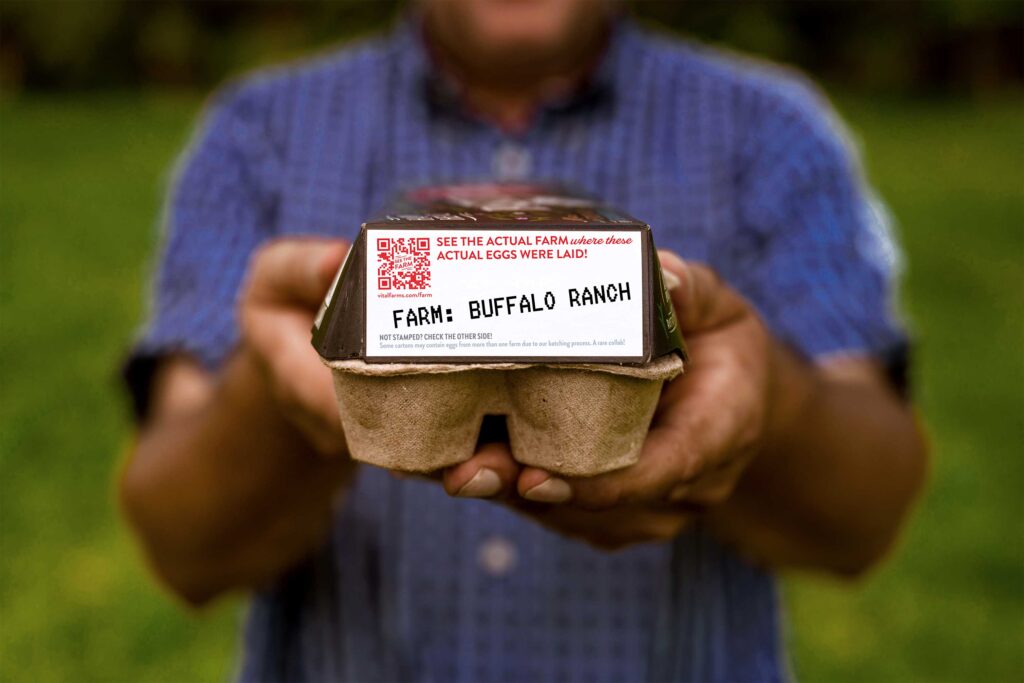
Real farms. Real eggs. Real easy to trace.



meet our Vital Farmers
Carol & Troy
Top FAQs
We thought you'd never ask
While eggs can last past the date on the carton, our recommendation and the safest approach is to consume them before that date to ensure you are getting the freshest eggs. We defer to the FDA’s guidance on the safe consumption of eggs. They recommend consuming eggs within 3-5 weeks of purchase when kept in their original container and stored in a clean refrigerator at a temperature of 40 F or below.
You can find more information on the safe handling of eggs on the FDA website.
Everything a hen eats affects her yolk color. Our hens’ diet consists of what they forage from the pasture each day, alongside a nutritionally dense essential feed to supply the protein and energy they need to roam and lay regularly.
Out on pasture, they’re snacking on grasses and insects, which creates variation, while natural paprika and marigold are added to their essential feed to help support a richer, deeper color in a consistent way.
The reality of pasture-raised farming is that yolks naturally vary depending on what hens eat day to day and season to season. In the summer to early fall, the girls tend to eat less due to the warmer temperatures. In the winter, they tend to eat more to stay warm. We like to lean in and embrace this variance. Seasons and diets change, and our yolks reflect that.
A combination of a foraged diet and essential feed helps our pasture-raised laying hens meet their nutritional needs. The girls spend their days foraging in the pastures, seeking out native and seasonal grasses, pecking for their next grasshopper, or digging up worms.
Alongside their pasture snacks, they receive an essential feed that consists primarily of corn and soybean meal. The nutritional density and composition of the feed provide the protein and energy our hens need to lay regularly and roam the pasture. The feed also contains paprika and marigold, which, along with their pasture snacks, help the hens produce eggs with deep orange yolks.
This feed is developed by an animal nutritionist to ensure the girls receive all the nutrients they need to support their health, active lifestyles, and overall well-being.
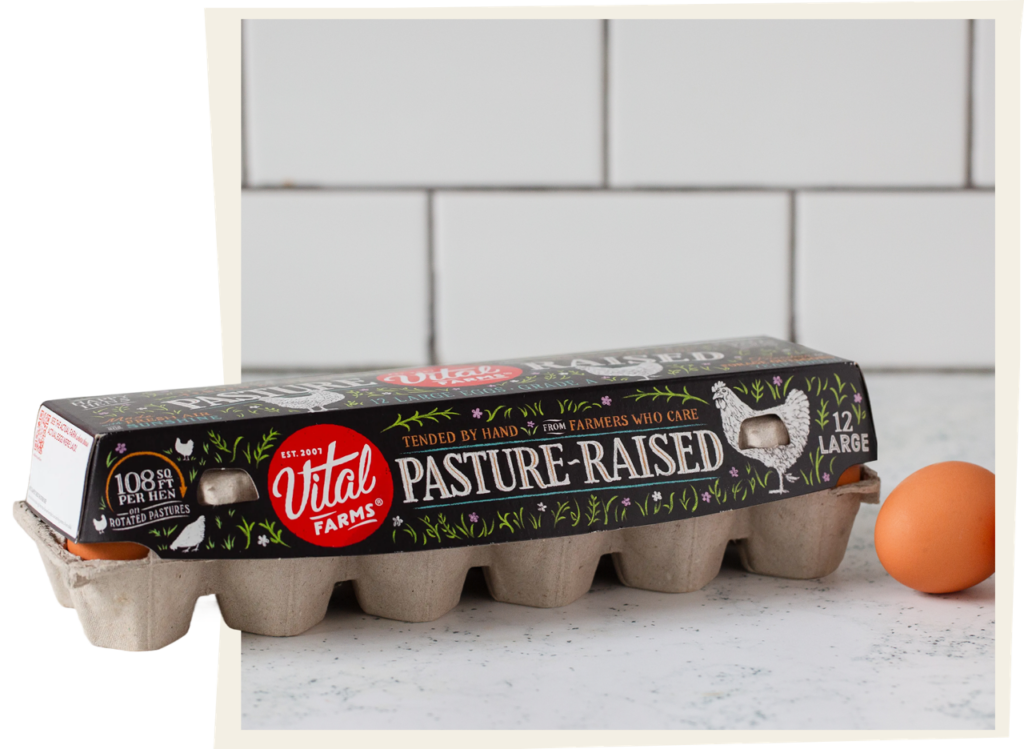
Pasture-raised eggs are laid by hens that can spend their days outdoors roaming the pastures as they please. Our hens enjoy at least 108 square feet of pasture each, with plenty of fresh air and sunshine year-round. This outdoor access gives the girls a lifestyle they deserve, with freedom to forage through rotated pastures, feasting on a natural buffet of grasses, bugs, and whatever they find outdoors, alongside their essential feed.
Both barns and pasture play a key role in our hens’ daily routine. Barns are a safe place for our girls to rest and lay their eggs. The girls instinctively migrate from the pasture to the barn each night around sunset, where they sleep safe and protected from predators. Our hens typically lay eggs in the mornings, then at approximately 9:30 a.m., the barn doors open and the girls are free to roam and forage in pastures until sundown.
Because each hen has full freedom to choose how to spend her day, the time they spend on the pasture will naturally vary. Year-round access to pasture provides the girls ample room to express their natural behaviors. Hens have a strong natural instinct to forage, scratch, and peck at all nature has to offer, but we never force them outside.
All our eggs come from farms where the hens have access to pastures year round. The difference between our cartons is based on the organic status of the essential feed developed by expert animal nutritionists. Our USDA Certified Organic and Restorative Pasture-Raised Eggs are given organic essential feed, containing ingredients that are certified organic and non-GMO. The eggs in our standard Pasture-Raised and True Blues cartons come from girls that receive conventional essential feed that is not required to be certified organic or non-GMO. Regardless of the type of egg, our farmers do not use any herbicides or pesticides on their pastures.
You can find our eggs in grocery stores nationwide — both natural and mainstream. Use our store locator to find a grocer near you that carries our pasture-raised goodness.