
At Vital Farms, we prioritize the health and welfare of our hens. Hen health often starts with a nutrient-rich diet.
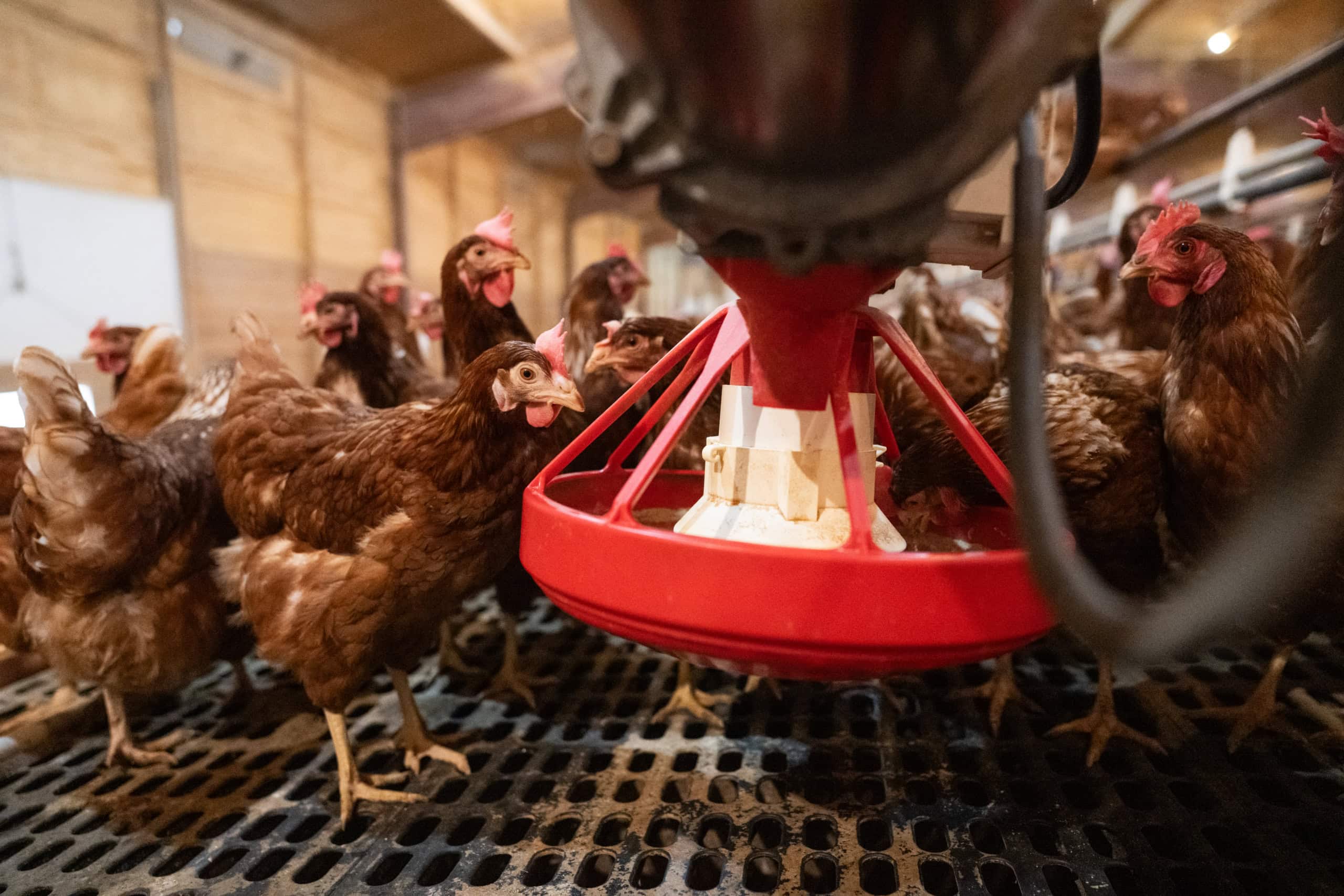
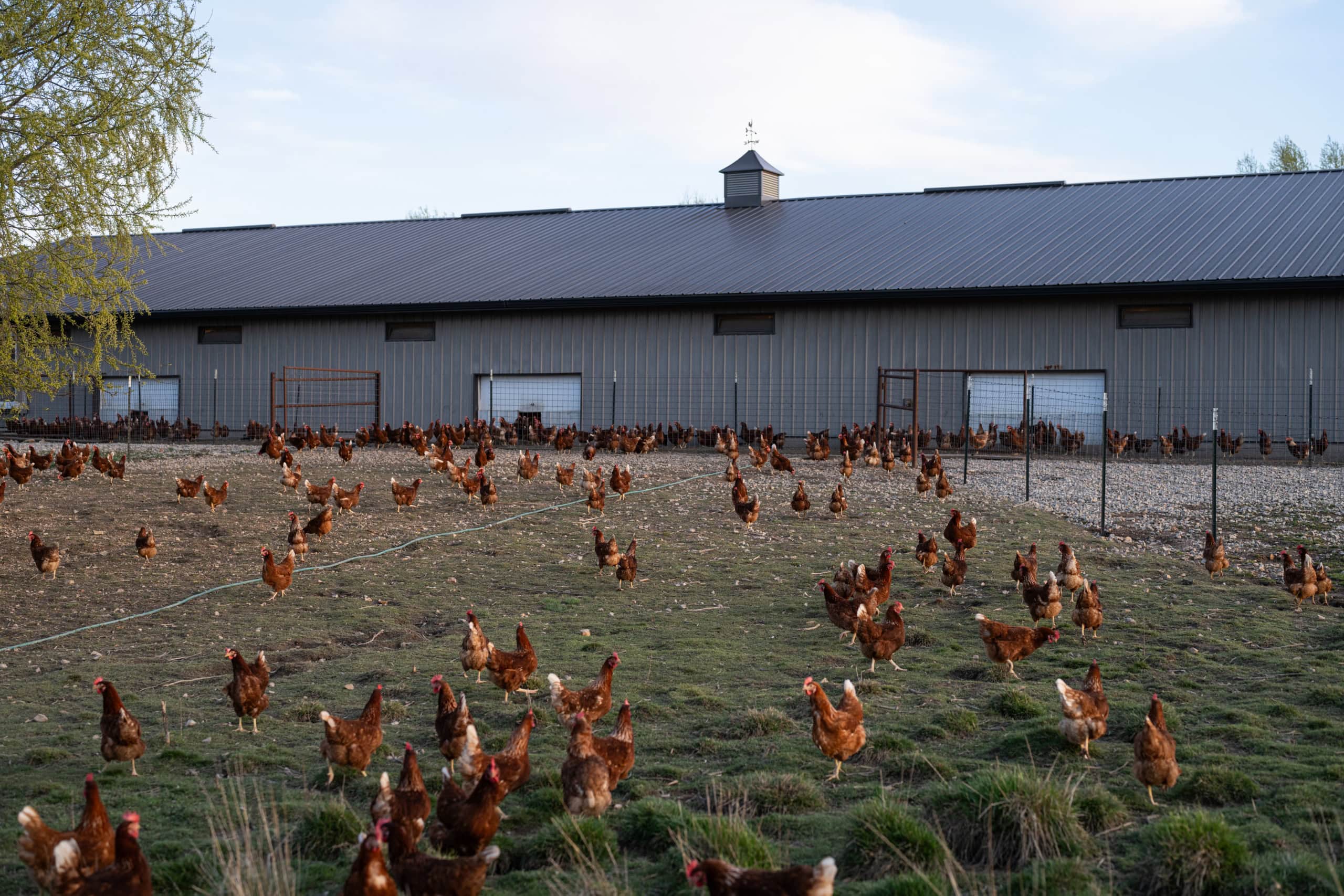
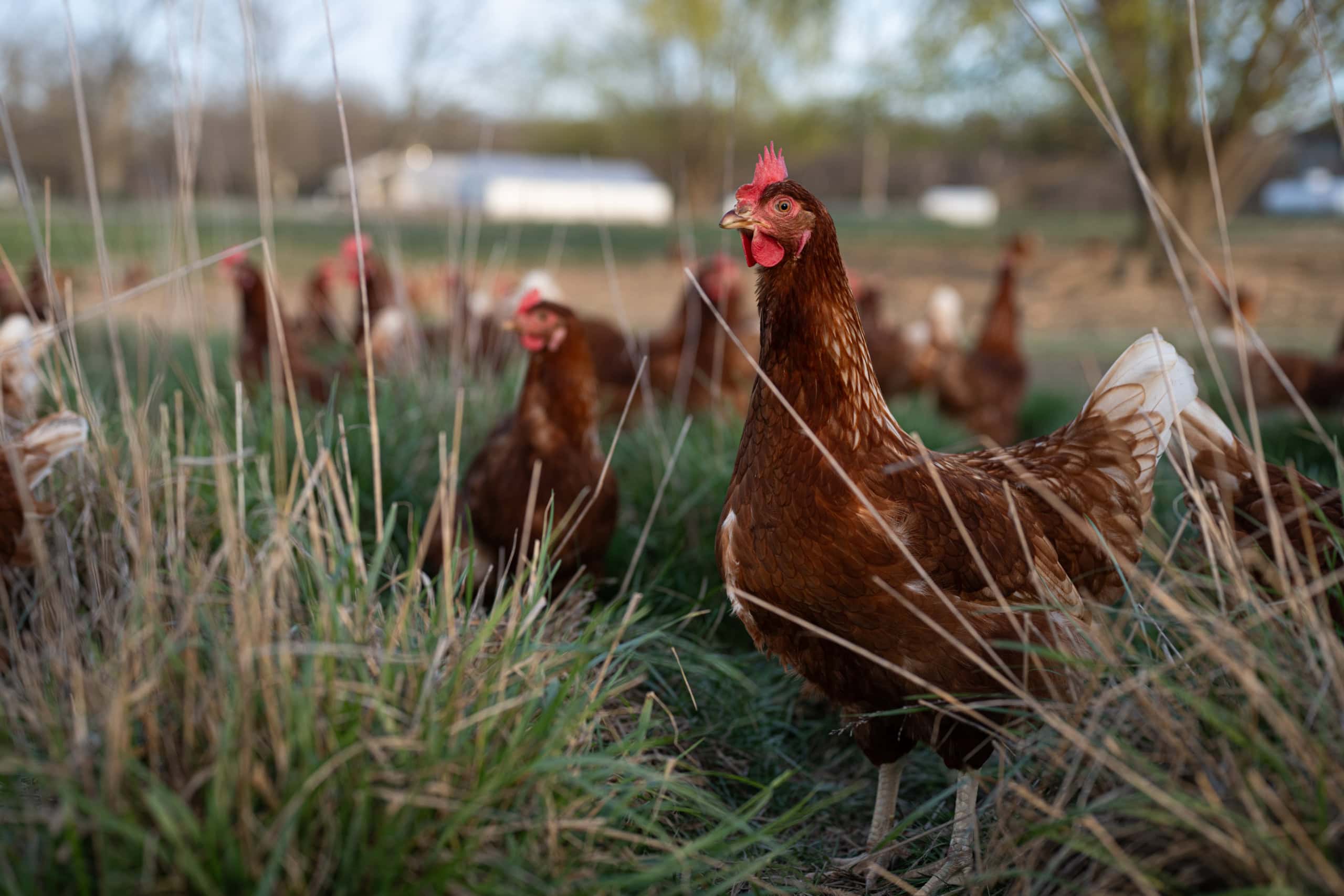
The girls spend their days foraging in pastures, seeking out native and seasonal grasses, wildflowers, and insects to munch on. Alongside their forage, our farmers work with an animal nutritionist to develop a blend of essential feed. The nutritional density and composition of the feed provide the protein and energy our hens need to lay regularly and roam the pasture. The feed also contains paprika and marigold, which, along with their pasture snacks, help the hens produce eggs with deep orange yolks
We spoke with our feed expert, Lacy, to get the inside scoop on what our hens are eating:

How would you describe what our hens eat, in your own words?
When the hens are outside, they’re enjoying a buffet of native grasses and insects. In addition, we keep them well nourished with what I like to say is Corn, Soybean Meal, and Rocks. The more correct way to say it would be Corn, Soybean Meal, Vitamins, and Minerals.
Which ingredients impact the golden hue of our yolks?
Natural ingredients, including paprika and marigold, along with their outdoor snacks, provide nutrients and help the hens produce eggs with deep orange yolks.
Why does yolk color vary?
Everything a hen eats, including pasture grazing and essential feed, impacts yolk color. Because the girls are pasture-raised, it’s natural for yolk color to vary. This variation is affected by how often hens eat and what they eat.
In the summer, the girls tend to eat less due to the warmer temperatures, much like if you went outside in hot weather, the last thing you’d want is a three-course meal!
In the winter, they tend to eat more to stay warm. Like us, they like those extra snacks on chilly winter days.
Why do pasture-raised hens need more calories?
Our hens are living their best lives with the choice to roam about wherever they please. It would be like comparing someone who likes to take walks, play some pickleball, and go out dancing to someone who’s more of a couch potato.
Do our hens have access to feed at all times?
Yes, the levels vary depending on the time of day and when the last feeding was.
What is “grit” and why is it important?
Grit, such as stones and oyster shells, is given to our girls to increase the development our girls’ digestive system. Put simply, it allows their stomach to ingest foraged material, such as grasses, seeds and insects, and increases the digestibility of nutrients in the feed.


