
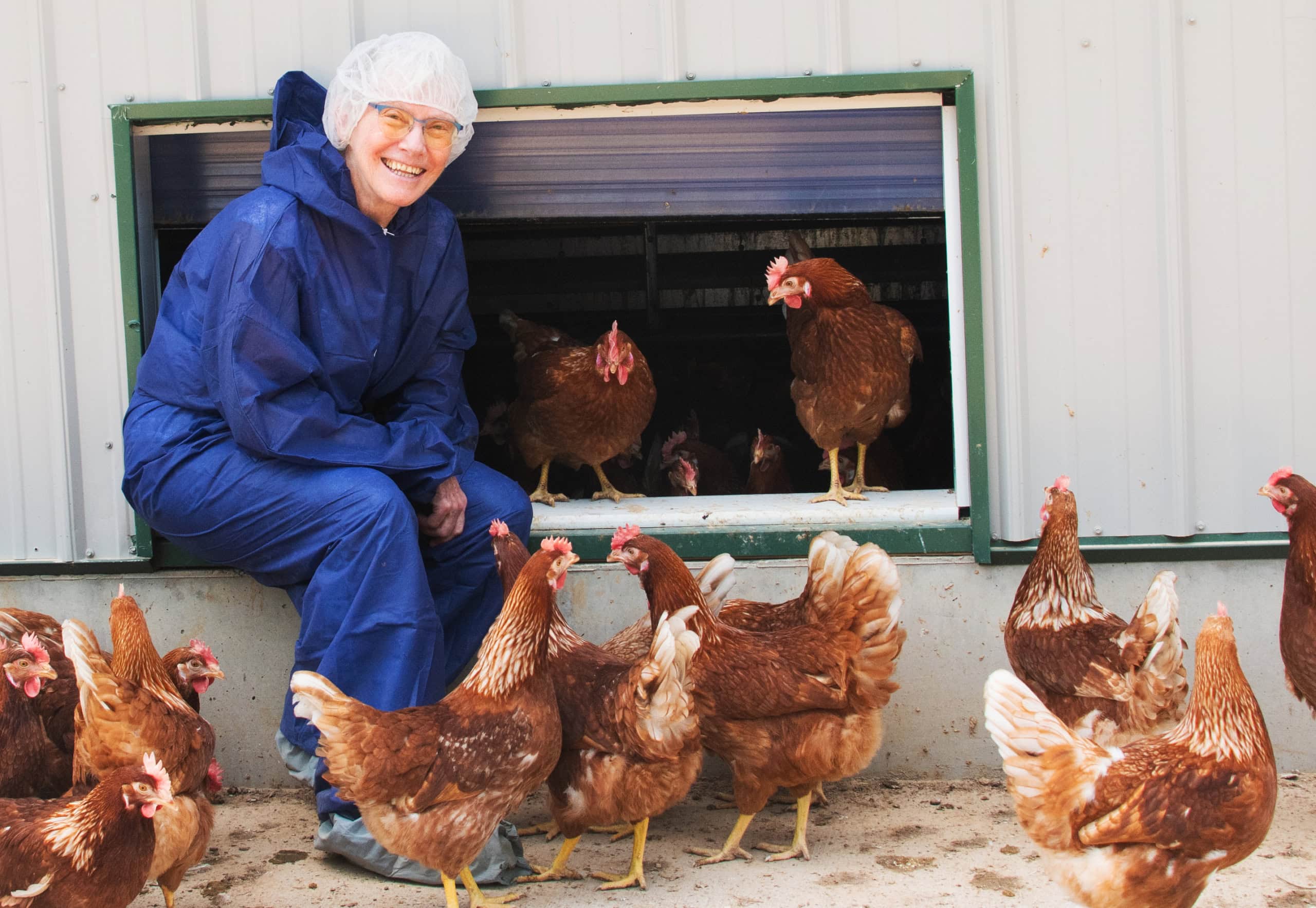
At Vital Farms, we talk a lot about our high standards for animal welfare and the care that goes into raising pasture-raised hens. Animal welfare is more than a phrase sprinkled into our marketing lingo. It’s baked into everything we do. And if you want to meet the person who helped make that possible, allow us to introduce Liz: our resident animal lover, hen whisperer, and the woman who literally helped write the standards we follow today.
Liz officially joined Vital Farms in 2024 as our Animal Welfare Specialist, but her story with us started long before that. “I think I’m the only person here besides our founder, Matt O’ ‘Hayer, who’s actually stood on our very first farm,” Liz notes with her hallmark friendly smile.
Before Liz became a part of our team, she helped shape the standards that defined pasture-raised farming in the first place. Her work with key industry stakeholders played a major role in formalizing the practices that set us — and the entire conscious farming movement — apart.
How it all began
Liz grew up on her grandfather’s dairy farm in Ohio, the kind of place where early mornings and muddy boots were the norm.
“We had chickens,” she remembers, “but I didn’t like them. They pecked me!” She laughs telling this story now because, as fate would have it, chickens would eventually become her calling.
Liz’s childhood gave her an early education in the rhythms of farm life — but her career didn’t take a straight path from there. Like many good stories, it took some detours: time spent working restaurants, studying people, and reading social cues. Eventually, she found her way to Whole Foods Market on the quality standards team, where she was asked by then-CEO John Mackey to “set the highest standard in the world for animal welfare.”
And so she did.
Building the Animal Welfare Standards
Liz began working with animal rights advocates, farmers, scientists, and everyone in between to understand what truly humane animal care should look like across multiple species and farming systems. “What I was doing didn’t even have a name at the time,” she says. “But 10 years into it, John Mackey finally gave it one. And that name was Conscious Capitalism.”
The Chicken Behind the Egg
When Liz talks about eggs, she doesn’t start with the shell or the yolk. She starts with the chicken. And for many of us at Vital Farms, she’s helped reframe the way we think about our work. Eggs aren’t just what we produce, but who we produce it with.
“One of my favorite things about my role now is talking to teams who never really thought about chickens before,” she says. “Finance, tech, operations — folks who know a lot about eggs, but not a lot about hens.” Through presentations, farm visits, and good ol’-fashioned storytelling, Liz connects the dots between the hen on the pasture and the product in the carton.
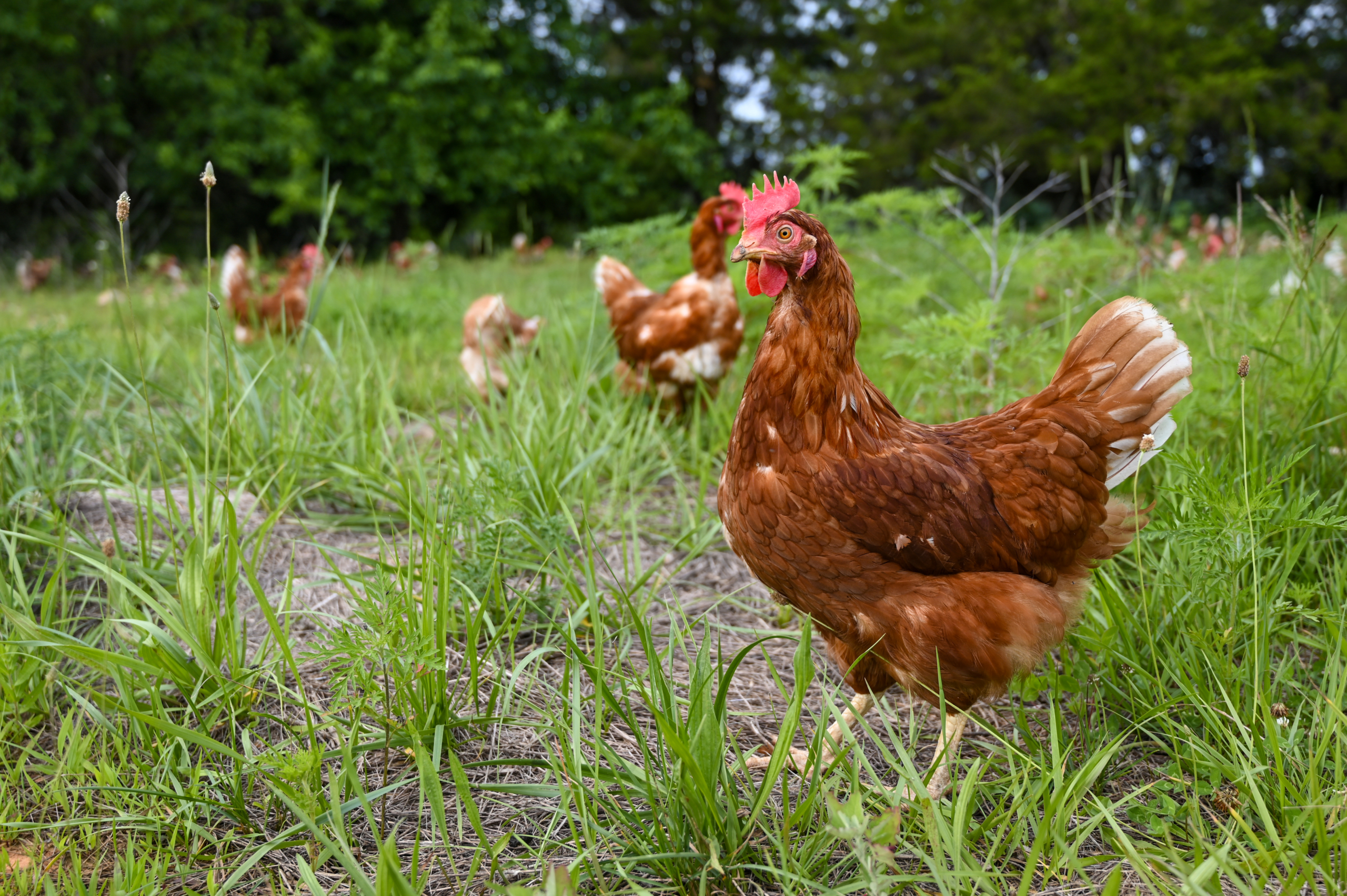
Because behind every egg is a hen. And if you ask Liz how to tell if that hen is thriving, she’ll say it’s in the vibe. “They’re calm. They’re curious. They’re not kerfuffling,” she says. “Just like us when we feel safe.”
Listening to Farmers (and the Hens)
Liz also works closely with the farmers in our network. “I’ve had farmers come up to me and say, ‘You’re the one who wrote those standards!’ And then a beat later, ‘Thank you.’”
While good animal welfare standards are rigorous, they’re not meant to be rigid. Liz sees farmers as partners in this work, not there to follow her rules, but instead as co-creators. Over the years, she’s helped adjust language in the standards based on farmer feedback, research, and hands-on experience.
“One farmer thanked me because he suggested a change to the standard, and we actually made it,” she recalls. “That kind of back-and-forth — that open line of communication — is what makes this work meaningful.”
A Living, Breathing Ecosystem
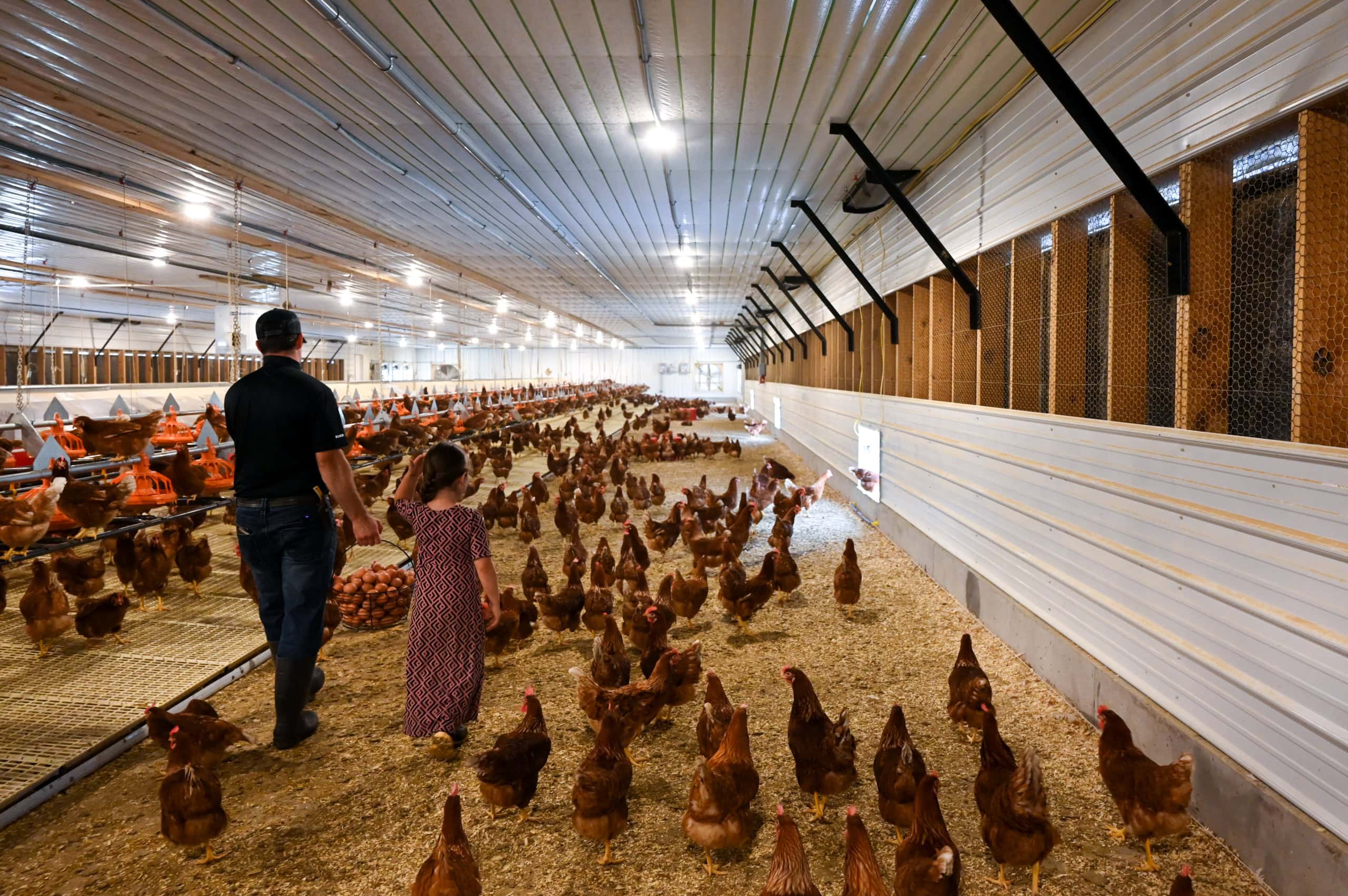
Liz’s version of animal welfare doesn’t stop with the animals. She’s thinking about the whole ecosystem: the land, the people, the practices, and the ripple effect.
In her words, “You can’t talk about ethical food without talking about the entire system around it.”
She appreciates that the principles of Conscious Capitalism are embedded into Vital Farms’ DNA. “When I got here, I realized something rare: this company wasn’t just borrowing these principles — they were built on them,” she says.
The Future of Animal Welfare at Vital Farms
Right now, Liz is working on refining and expanding our animal welfare standards. The goal? Make things even clearer and more accessible for farmers, while maintaining the integrity of what makes our standards special.
She’s also dreaming about what comes next: training programs, deeper animal welfare integration across teams, and yes, even better ways to help people understand our girls.
Spend just five minutes with Liz, and you’ll walk away knowing three things: she’s deeply passionate, endlessly curious, and fiercely dedicated to the girls that make Vital Farms possible.
“I still haven’t decided what I want to be when I grow up. But I know that for the last 20 years, and right now, it’s the animals that matter most to me.”
We’re lucky to have Liz on our team, and we think our hens would agree.


